
(HedgeCo.Net) Blackstone Inc. and KKR & Co. are increasingly shaping what industry analysts are calling a full-scale private equity renaissance in 2026, driven by renewed deal-making momentum, strategic deployment of dry powder, and the possibility of a rebound in new issuance following years of relative stagnation.
After a prolonged period of constrained deal flow, a confluence of economic signals — including moderating inflation, easing cost of capital, and stabilizing financial conditions — has revitalized the private equity market. Blackstone and KKR, long dominant names in U.S. alternative investing, now represent the forefront of this move as institutions and sovereign wealth investors seek higher returns outside public markets.
Blackstone’s Strategic Playbook
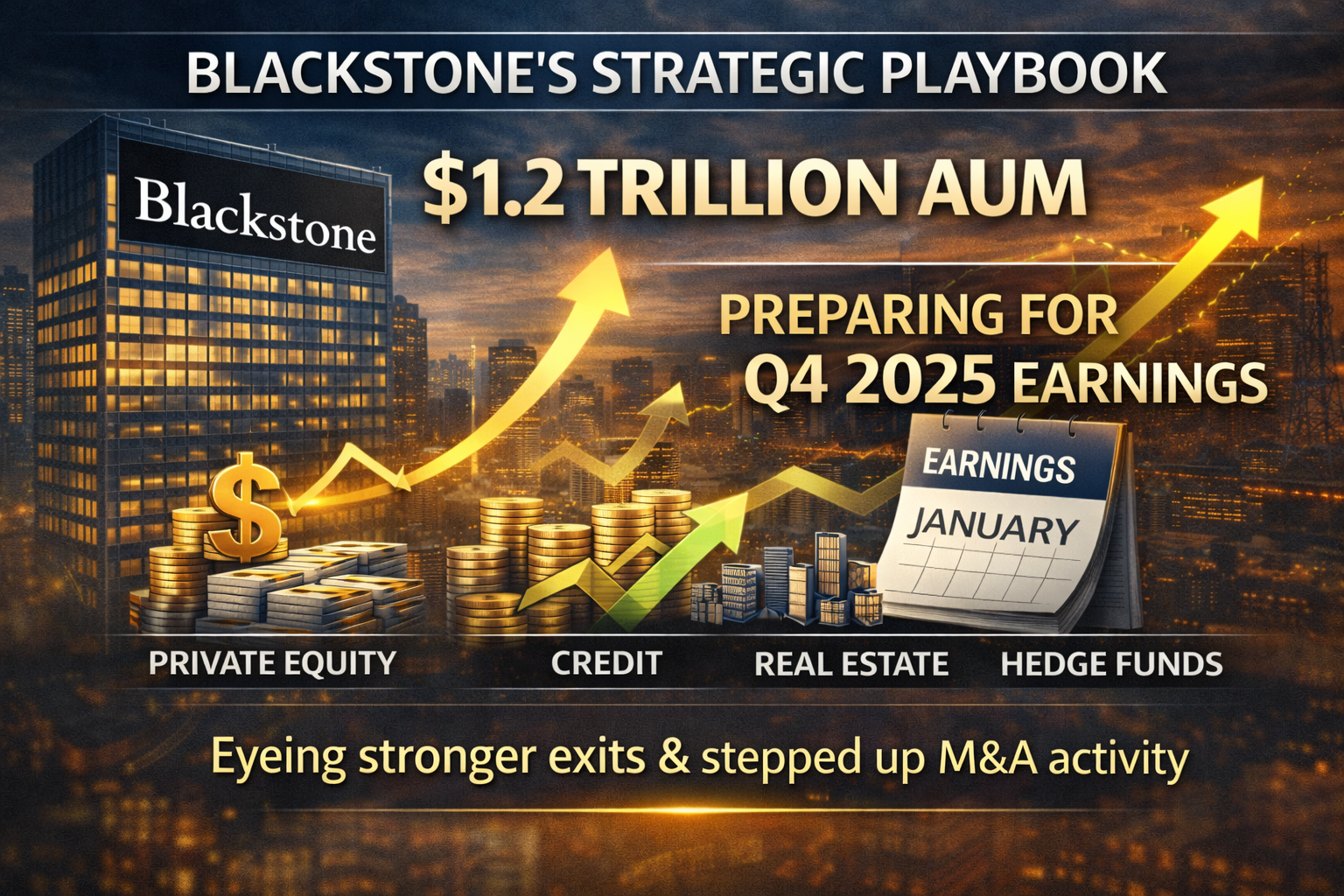
As the world’s largest alternative investment firm, Blackstone continues to leverage its scale across private equity, credit, real estate, and hedge funds. Total assets under management have eclipsed $1.2 trillion, cementing the firm’s decades-long leadership in buyouts and diversified private markets.
Q4 2025 earnings anticipation: Blackstone’s forthcoming earnings announcements (scheduled for late January) have captured investor attention as Barons and analysts alike look for indications of how deployment and realizations performed in an environment characterized by tighter valuations and selective deal flow. The firm’s recent internal outlook also underscores stronger exit markets — including doubled year-over-year $1 billion+ deals — and a more active global M&A backdrop, suggesting that the long-awaited deal “deal dam” has effectively broken.
KKR’s Strategic Expansion

Meanwhile, KKR & Co. reported an AUM milestone surpassing $1.3 trillion — a testament to its evolution from a leveraged buyout house into a broad multi-asset and alternatives powerhouse. Driven not just by traditional buyouts but also by credit, insurance, and strategic infrastructure investments, KKR’s diversified platform has benefited from increasing LP confidence and a late-cycle shift toward private capital deployment.
KKR’s emphasis on credit-led inflows and fee-related earnings growth, even amid periods of heightened credit risk, signals an appetite among institutional investors for risk-adjusted return streams that outperform traditional fixed income and equities.
What This Means for 2026
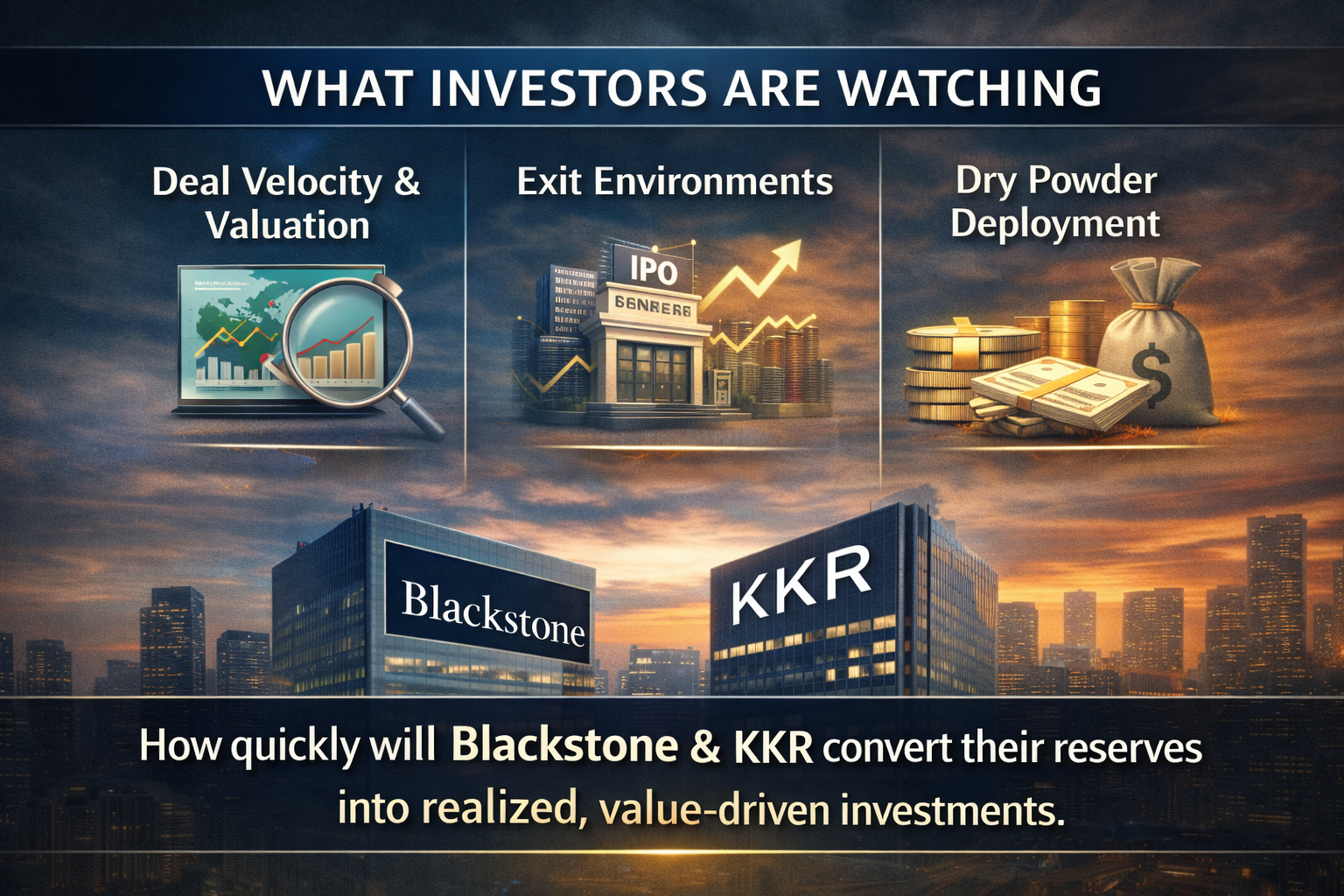
With both firms preparing earnings calls and capital deployment updates, institutional investors are closely watching:
- Deal velocity and valuation trends: Will private market valuations start to normalize, or will high entry prices persist?
- Exit environments: IPO markets and strategic sales are crucial to fund performance and LP liquidity.
- Dry powder deployment: How quickly Blackstone and KKR convert their reserves into realized, value-driven investments.
The narrative emerging from Blackstone and KKR signals that private markets — particularly large leveraged buyouts and credit — are no longer waiting on the sidelines. After years of deal drought, the sector’s largest players are deploying capital at scale, positioning 2026 as a pivotal year for the industry’s comeback.