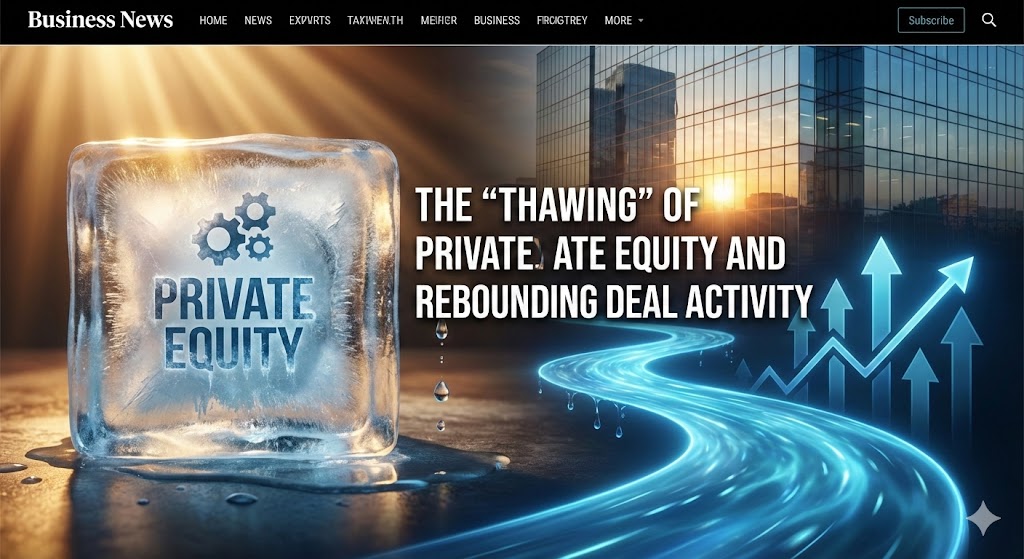
(HedgeCo.Net) After two years of paralysis, private equity is showing signs of life.The combination of elevated interest rates, valuation gaps, and frozen exit markets made 2025 one of the quietest dealmaking years since the global financial crisis. Sponsors sat on record dry powder, sellers resisted markdowns, and IPO windows remained firmly shut. By early 2026, that standoff is easing.
Rates Are No Longer the Enemy
The single biggest change is psychological. While interest rates remain higher than the ultra-low era of the 2010s, the direction of travel matters more than the absolute level. With U.S. monetary policy easing and financing markets stabilizing, dealmakers are once again able to model transactions with confidence.
Debt costs are no longer rising unpredictably. That stability has narrowed valuation gaps and allowed buyers and sellers to meet in the middle.
Mid-Market Momentum
The rebound is most visible in the mid-market.
Mega-deals remain challenging, constrained by financing complexity and regulatory scrutiny. But mid-sized transactions — often founder-owned businesses with strong cash flows — are clearing at attractive multiples.
Sponsors are leaning into operational value creation rather than multiple expansion. Cost discipline, pricing power, and strategic add-ons are back at the center of the playbook.
The Exit Market Reawakens
Perhaps the most important shift is on the exit side.
IPO markets are not roaring, but they are reopening. Select listings are clearing, particularly for profitable, scaled companies with clear equity stories. At the same time, sponsor-to-sponsor sales are increasing, aided by deeper secondary capital and continuation vehicles.
This matters because exits drive everything else. As liquidity returns, LP confidence improves, distributions pick up, and fundraising cycles restart.
A More Disciplined Era
The “thaw” does not mean a return to excess.
Private equity in 2026 is more selective, more conservative, and more operationally focused than in prior cycles. Underwriting assumes slower growth, higher costs of capital, and greater macro volatility.
For investors, this reset may prove healthy. The next vintage is shaping up to be less about financial engineering and more about genuine business building.