(HedgeCo.Net) The hedge fund technology stack and executive leadership are undergoing notable transitions at some of the biggest U.S. players, with implications for strategy execution, quant capabilities, and risk infrastructure.
Even as hedge fund performance posted robust figures in 2025, the industry’s internal mechanics — particularly around technology leadership and talent management — are evolving, reflecting broader shifts in how top funds integrate innovation and human capital.
Citadel’s CTO Transition: A Strategic Signal
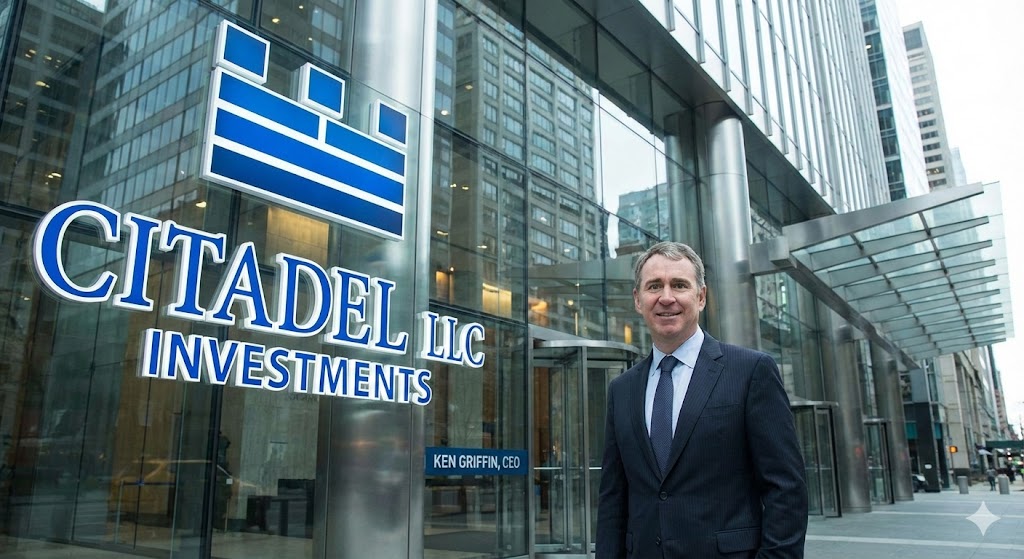
In a move that has drawn industry attention, Citadel LLC announced that Umesh Subramanian will step down as Chief Technology Officer after a seven-year tenure, transitioning to a broader strategic role within the firm’s investment and innovation agenda.
Subramanian has overseen substantial development of Citadel’s engineering platform — particularly around advanced analytics, risk systems, and data infrastructure — as the firm continues to blend generative AI and machine learning into both portfolio construction and trade execution systems.
The transition comes as Andrew Janian — a former Two Sigma executive and long-time equities engineering leader at Citadel — returns as interim CTO, signaling continuity in technological priorities.
Why This Matters for Hedge Fund Tech Strategy:
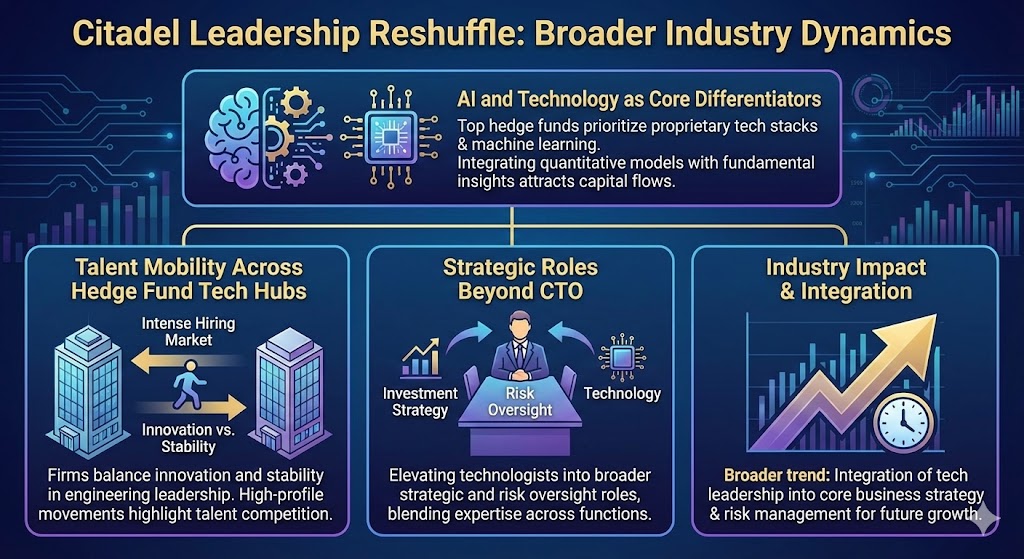
Citadel’s leadership reshuffle speaks to several broader industry dynamics:
- AI and Technology as Core Differentiators: Top hedge funds increasingly prioritize proprietary technology stacks and machine learning frameworks as essential competitive differentiators — not just operational tools. Firms that excel at integrating quantitative models with fundamental insights are attracting greater capital flows.
- Talent Mobility Across Hedge Fund Tech Hubs: The hedge fund industry’s hiring market for technologists remains intense. High-profile movements like Janian’s ascendance highlight how institutional players must strike a balance between innovation and stability in engineering leadership.
- Strategic Roles Beyond CTO: Subramanian’s new focus on broader strategic initiatives may reflect a trend of elevating technologists into investment strategy and risk oversight roles, blending expertise across functions.
Execution Platforms and Real-Time Risk Systems
Technological infrastructure at leading hedge funds is evolving along several vectors:
- Real-Time Risk Analytics: As volatility continues to shape market outcomes, funds are investing in instantaneous risk scoring models and cross-asset risk dashboards.
- Machine-Learning Based Signal Pipelines: Firms are increasingly deploying feature optimization, adaptive signal scoring, and randomized search heuristics designed to augment traditional factor models (reflecting broader academic research findings on machine learning in investments).
- Automated Market Microstructure Models: Quant funds are enhancing execution algorithms to balance speed, cost, and market impact, particularly in equities and high-yield fixed-income markets.
Structural Implications for Asset Allocators
For allocators who evaluate managers on risk systems and technological edge, leadership transitions like Citadel’s CTO change are more than administrative shifts — they can signal evolving philosophies around:
- Data Governance and Model Oversight
- AI-Driven Risk Management
- Investment Platform Architecture
In an industry where quant signals and systematic models now sway significant capital flows, integrating technologists deeply into investment leadership is increasingly the norm.