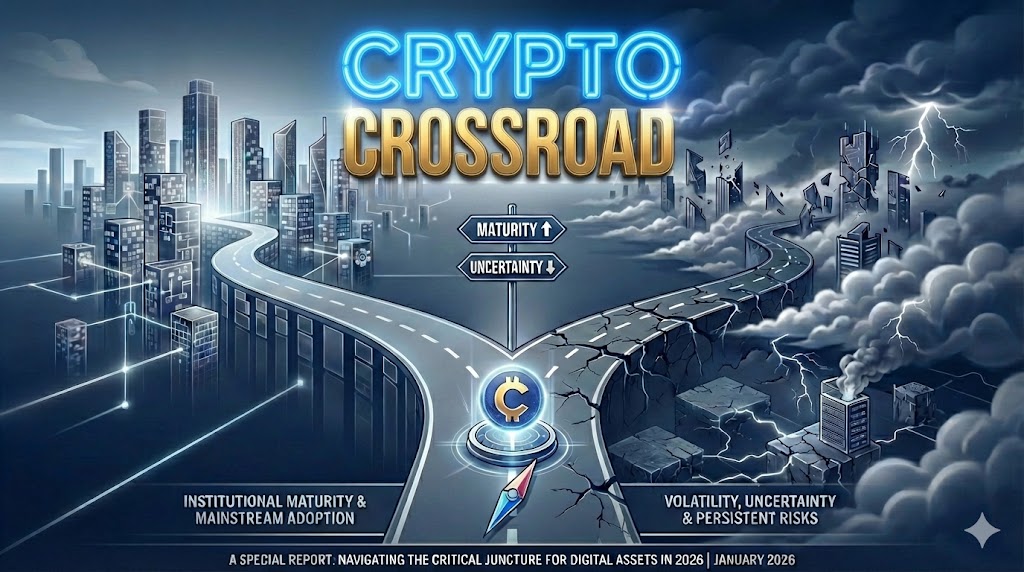
(HedgeCo.Net) In what is shaping up to be the defining narrative of 2026, the cryptocurrency sector is experiencing both heightened market volatility and fundamental structural shifts that mark a transition from speculative trading toward mainstream financial integration.
Four major Global developments highlight how Market Stress is in conflict with Regulatory Inflection in 2026:
- The collapse of support for the U.S. CLARITY Act, intensifying uncertainty about American regulatory pathways.
- The New York Stock Exchange’s announcement of a 24/7 blockchain-based trading platform for tokenized securities.
- India’s central bank proposal to link BRICS CBDCs, signaling cross-border digital currency cooperation.
- Ripple’s elevated presence at WEF 2026, positioning crypto firms within global finance dialogues.
Together, these developments highlight an inflection point where regulation, institutional infrastructure, and macro policy trends intersect — shaping the path forward for digital assets.
The CLARITY Act Reversal: A Wake-Up Call for U.S. Crypto Regulation
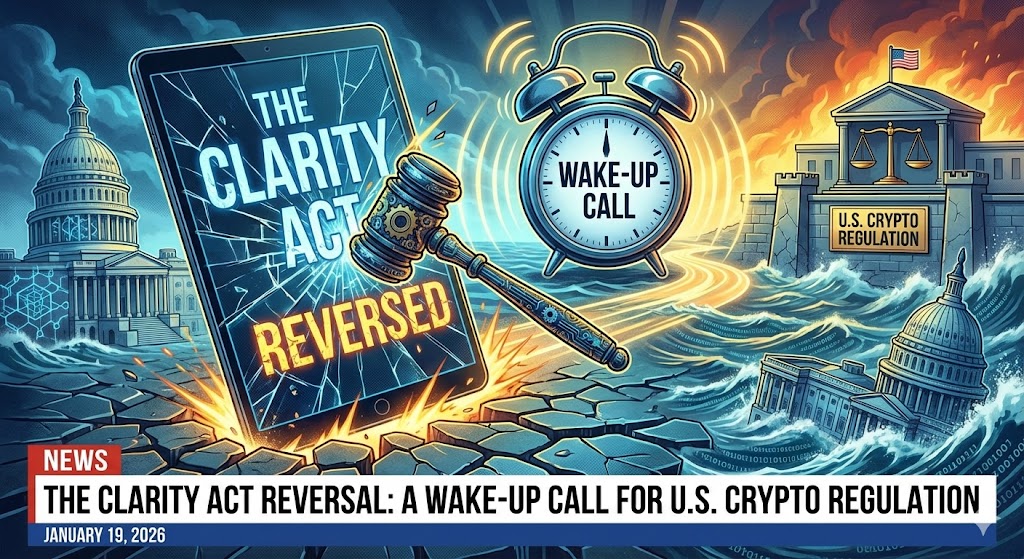
Late yesterday, the crypto world was rocked when Coinbase withdrew support for the CLARITY Act, a high-profile piece of U.S. legislation initially championed by industry advocates as a comprehensive regulatory framework for digital assets.
The CLARITY Act was designed to clarify digital asset oversight, defining roles for the Securities and Exchange Commission (SEC), Commodity Futures Trading Commission (CFTC), and other regulators. It also sought to address stablecoin regulation, decentralized finance (DeFi), and tokenized assets. However, once Senate revisions were introduced, including provisions crypto firms viewed as overly restrictive or ill-defined, key supporters — notably Coinbase — publicly withdrew backing.
What This Means
- Regulatory uncertainty has increased. The Act’s derailing leaves the U.S. without a clear, bipartisan crypto market framework, at least in the near term. Enforcement ambiguity between the SEC and CFTC remains unresolved.
- Market interpretation: near-term volatility. Without legislative clarity, institutional investors may hesitate to commit large capital to regulated crypto products in the U.S., slowing adoption and investment flows.
- Industry division surfaces. The retreat by a leading exchange underscores growing tensions between crypto proponents and regulators — raising questions about industry self-governance and political strategy.
The immediate effect was felt in markets and equities: Coinbase stock experienced a notable decline following the withdrawal and legislative delay, reflecting investor nervousness about stalled regulation.
NYSE’s 24/7 Blockchain Securities Platform — A Game-Changer for Tokenization
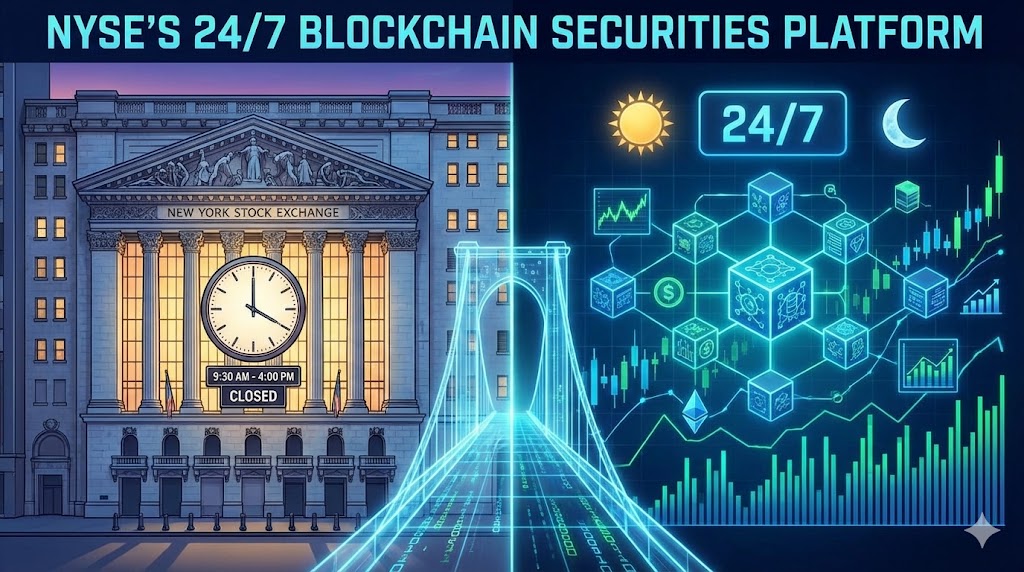
In stark contrast to the regulatory lull in Washington, traditional finance is accelerating blockchain adoption overseas. The New York Stock Exchange (NYSE) announced development of a new 24/7 trading platform for blockchain-based securities, a potential watershed for tokenized financial markets.
Under this initiative, asset issuers could use blockchain tokens to represent ownership in stocks, bonds, or structured products — with round-the-clock trading and instant settlement that deviates sharply from hybrid trading models anchored in T+1 or T+2 settlement conventions.
Why It Matters
- Integration of digital asset rails into regulated securities markets — if approved, this platform could blur the lines between traditional equities and digital tokens, attracting institutional liquidity normally reserved for regulated exchanges.
- Stablecoins may serve as funding instruments, potentially linking fiat and digital asset corridors in ways unseen before.
- Global competitiveness — with regulators in Europe and Asia already advancing tokenization pilots, the NYSE move signals U.S. markets are still keen to innovate despite legislative grappling.
However, industry observers caution that regulatory alignment will be critical to realizing the platform’s potential — reinforcing how infrastructure progresses fastest when policy frameworks follow suit.
BRICS CBDC Linkage Proposal Signals Multi-Polar Digital Currency Future
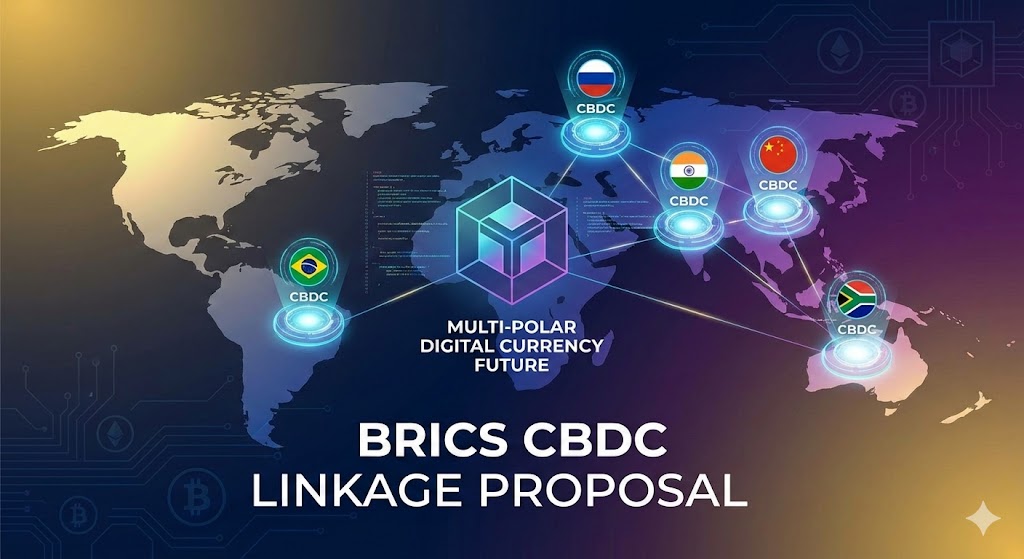
Beyond Western markets, India’s central bank has proposed linking the central bank digital currencies (CBDCs) of BRICS nations — Brazil, Russia, India, China, and South Africa — to facilitate cross-border payments and reduce reliance on the U.S. dollar.
The move, which could be formally pitched at the 2026 BRICS summit, illustrates how nations are exploring digital currencies not solely as domestic tools but as regional economic instruments.
Key Implications
- Reduced friction in cross-border commerce. Linked CBDCs could streamline settlement, reducing costs and time delays traditionally associated with correspondent banking.
- Strategic autonomy. BRICS linkage potentially counters Western dominance in global payment infrastructure, especially amid geopolitical tensions.
- Stablecoin competition. CBDC interoperability may provide a regulated alternative to privately issued stablecoins, reshaping how digital payments ecosystems evolve internationally.
This development amplifies a broader narrative: digital currencies are no longer fringe tech experiments but national economic tools with strategic implications.
Ripple’s Strategic Presence at WEF 2026 Highlights Industry’s Institutional Pivot

In Davos this week, Ripple secured official sponsorship of “USA HOUSE Davos 2026”, signaling its intention to play a central role in discussions at the intersection of policy, finance, and innovation.
Being featured alongside corporate giants underscores Ripple’s evolution — from a blockchain payment startup to a serious player in global financial conversations, especially around liquidity, stablecoins, and cross-border payments.
Ripple’s Strategic Implications
- Institutional validation: Sponsorship provides access to policymakers and financial leaders who influence capital allocation and regulatory direction.
- Market positioning: Ripple’s technology — particularly its focus on cross-border settlement — aligns with broader industry shifts away from isolated token markets toward integrated financial networks.
- Narrative reframe: Crypto firms increasingly position themselves as partners to the financial system rather than disruptors.
Market Signals: Price Volatility Reflects Policy Uncertainty
Against the backdrop of regulatory shakeups and institutional developments, crypto markets have shown renewed volatility. On January 19, Bitcoin dipped to approximately $92,000 and Ethereum near $3,200 as broader risk sentiment retreated amid geopolitical and policy uncertainty.
Altcoins have reflected similar pressure, with liquidity flows ebbing and volatility spiking across several major chains. According to live market data, Bitcoin’s 24-hour price drift underscores a wider pause in momentum — although analysts suggest this is less structural and more driven by short-term sentiment.
This price action suggests markets are pricing regulatory risk and macro headwinds concurrently — an environment that often characterizes transitional phases in emerging asset classes.
Regulation: From Burden to Catalyst?
Despite the CLARITY Act’s collapse, global regulatory momentum continues — albeit unevenly. The World Economic Forum described 2026 as a pivotal year for digital assets, where clearer global regulation and stablecoin adoption are bridging traditional and digital finance.
Recent comprehensive regulatory analysis finds that 2025 saw dramatic regulatory shifts in the U.S., including reduced enforcement-centric approaches and interpretations that broaden digital asset participation by banks and brokers.
Investment firms and analysts highlight two converging regulatory themes:
- Clarity for institutional participants — frameworks that define property rights, custody standards, and standardized compliance protocols.
- Infrastructure enablement — rules that support innovation while protecting investors and systemic stability.
In this context, regulation is both a source of short-term uncertainty and a long-term enabler of mainstream adoption — especially if legislative and regulatory actions evolve in tandem.
The Road Ahead: From Volatility to Structural Growth
Today’s intersection of market stress, policy change, institutional infrastructure expansion, and geopolitical digital currency initiatives suggests that crypto is evolving into a multi-layered financial asset category. Key themes for the near future include:
- Regulatory resolution: Whether the U.S. can produce a coherent digital asset framework remains critical for institutional capital allocation.
- Tokenization adoption: Infrastructure moves by the NYSE and other exchanges may catalyze a new asset class of digitally native securities.
- Cross-border digital currency frameworks: CBDC linkage initiatives may redefine international payment systems.
- Institutional legitimization: Participation by entities like Ripple and others in global forums signals growing integration with established financial systems.
Conclusion — Crypto’s Inflection in 2026
The crypto sector stands at a strategic inflection point: near-term volatility fueled by regulatory uncertainty coexists with long-term structural adoption trends. What was once predominantly a speculative market is now grappling with its evolving role as digital financial infrastructure, facing challenges and opportunities that parallel those of traditional finance.