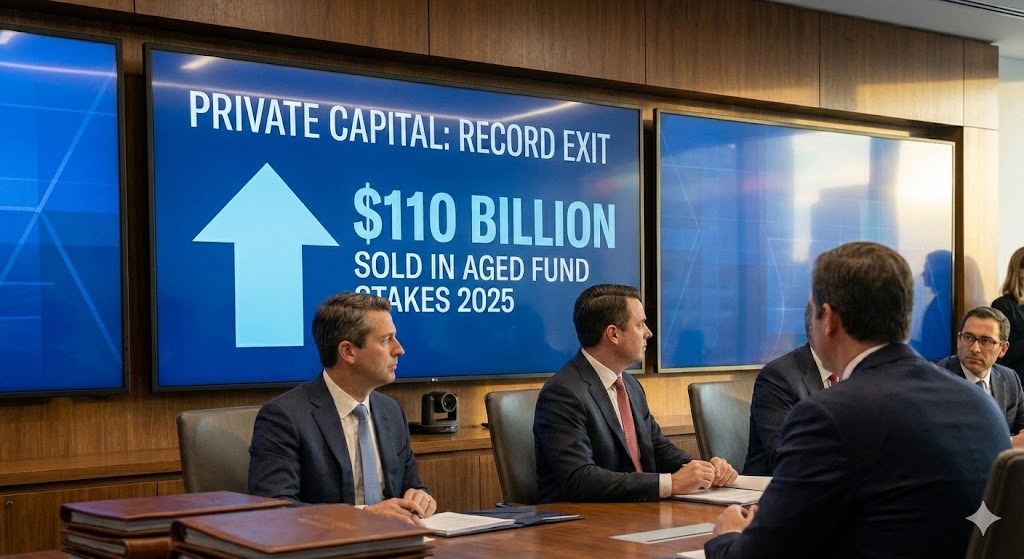
(HedgeCo.Net) Private capital investors sold a record $110 billion in aged fund stakes in 2025 — a 25% jump vs. 2024 — spotlighting the rise of secondaries as a central liquidity conduit in private markets.
Overview
2025’s private equity cycle presented exits that lagged expectations and forced holders of legacy portfolios to seek liquidity creatively. The result: a boom in secondary transactions that may redefine private capital’s structural landscape in 2026.
1. Understanding the Secondary Explosion
Secondary deals — where limited partners (LPs) sell their fund stakes to new buyers — surged to new heights. Private equity portfolios, private credit positions, venture capital stakes, and infrastructure holdings all saw heightened secondary activity last year.
Institutional investors, pension funds, and sovereign wealth entities leveraged the secondary market to rebalance portfolios, reduce concentration, and unlock value from aging assets.
2. Why Now? Exit Challenges & Portfolio Maturation
The traditional exit route — IPOs or strategic M&A — slowed in 2025, leading investors to find alternative liquidity mechanisms. Many companies remained private longer, valuations plateaued, and strategic sales slowed, making secondaries an increasingly attractive option.
In many cases, continuation vehicles and GP-led restructurings have blurred the line between primary and secondary markets, making liquidity solutions more bespoke and efficient.
3. Secondary as an Asset Class
With record fundraising for dedicated secondary funds and growing institutional interest, some analysts now contend secondaries may evolve into a standalone asset class, distinct from traditional private equity.
4. What This Means for Allocators
For institutional investors, secondaries offer:
- Accelerated liquidity
- Price discovery
- Portfolio rebalancing
- Access to seasoned assets with reduced blind-pool risk
For fund managers, active secondary markets reduce pressure to force early exits, allowing better time for value creation.