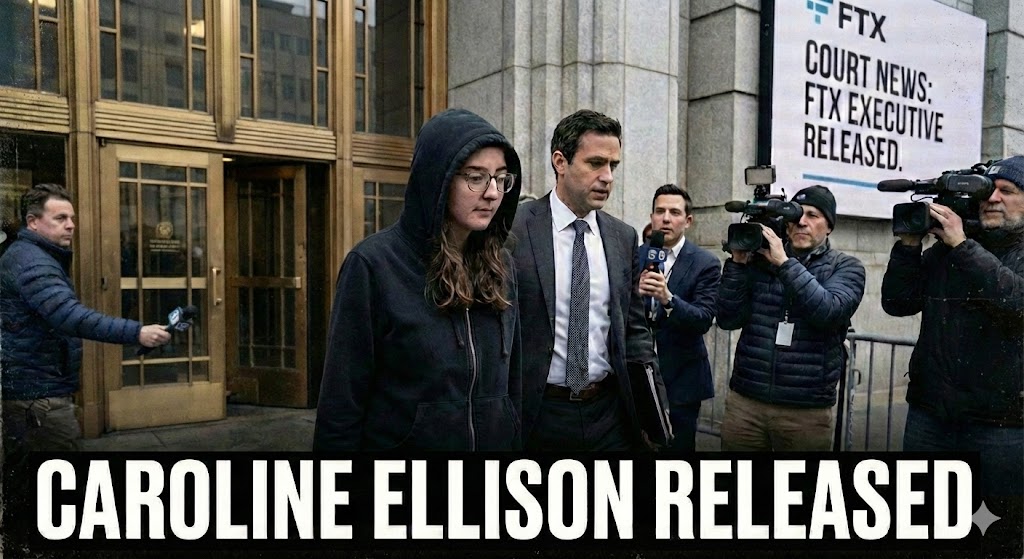
(HedgeCo.Net) In one of the most closely watched developments of the year, former FTX executive Caroline Ellison has been released from federal custody after serving part of her sentence in connection with the $8 billion collapse of FTX — an event that shook global crypto markets and regulatory frameworks alike.
This release reignites conversations about accountability, industry reform, and the long shadow of one of crypto’s foundational scandals. Ellison’s incarceration had been symbolic of broader industry reckoning; her release opens new debate about justice, rehabilitation, and the future of centralized exchanges.
1. The FTX Scandal and Ellison’s Role — A Brief Recap
Ellison was a top executive at FTX’s Alameda Research and was deeply involved in the risk management and trading operations that preceded FTX’s collapse in November 2022. She pled guilty to fraud and money-laundering charges in 2024, cooperating extensively with federal prosecutors.
Her cooperation played a pivotal role in the successful prosecution of FTX founder Sam Bankman-Fried, who received a 25-year sentence — one of the longest in U.S. corporate criminal history.
2. What Her Release Means for Crypto’s Legal Landscape
Ellison’s release — after serving roughly 14 months of a 24-month term — under supervised conditions highlights several key issues:
- Sentencing norms for financial crimes involving cryptocurrency
- The role of plea deals and cooperation agreements in complex fraud prosecutions
- Public perception of accountability in the crypto space
Legal experts note that her cooperation was instrumental in unraveling the opaque financial structures behind FTX and Alameda. This has set precedents for how future financial misconduct cases may be prosecuted, particularly those involving digital asset systems that blend decentralized and centralized components.
3. Industry Responses: From Critics to Reform Advocates
The crypto industry’s reaction has been broad and varied:
- Critics argue that the sentence was too lenient, especially given the widespread financial harm inflicted on retail investors.
- Reform advocates emphasize the importance of rehabilitation and structured oversight in preventing future failures.
- Some voices in the legal community called for clearer statutory guidelines on sentencing in digital asset fraud cases — noting that traditional financial crime frameworks may not fully account for the complexities of blockchain-enabled transactions.
4. The Broader Implication for Centralized Exchanges
The FTX collapse has had a chilling effect on trust in centralized platforms and has accelerated interest in decentralized alternatives. Ellison’s release surfaces these themes once again, prompting reflection on:
- The need for stronger governance and transparency standards
- Enhanced third-party auditing and risk controls
- Regulatory frameworks that balance consumer protection with innovation
This event renews industry focus on how centralized exchanges operate — particularly in custody, risk management, and capital allocation.
5. The Narrative of Redemption and Legacy
Personal narratives matter in high-profile financial scandals. Ellison’s story may now enter broader cultural discourse — including potential media portrayals and public debate on accountability. These narratives influence investor confidence, regulatory engagement, and even academic inquiry into the ethics of crypto entrepreneurship.
Conclusion
Caroline Ellison’s release is not just a personal milestone — it is a broader symbolic moment for the crypto industry. It invites reflection on law, ethics, and the continued evolution of governance in digital finance. Whether her story will serve as a cautionary tale or a complex case study in justice and reform remains a key talking point as the industry continues to mature.