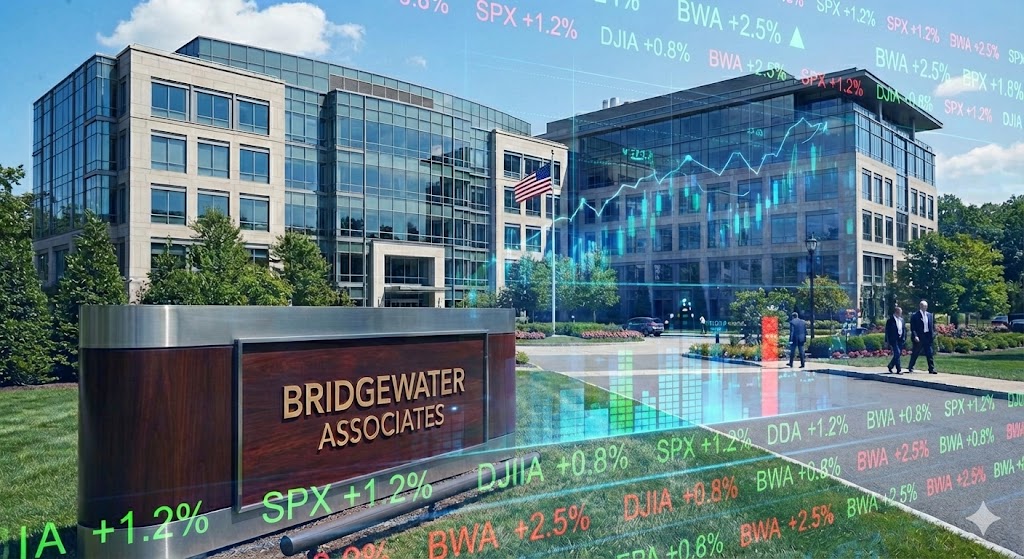
(HedgeCo.Net) If performance is one pillar of hedge fund relevance, talent is the other—and in 2026 the industry is spending aggressively to secure it. In the last two weeks alone, one of the most striking “people” stories came out of Bridgewater Associates: a significant expansion of employee equity ownership, granting stakes to more than 60% of staffbeginning in 2026. Reuters+1
That move is notable not just because Bridgewater is one of the industry’s most iconic names, but because it signals a broader trend: hedge fund competition is increasingly about institution-building, not just trading. Firms are fighting on compensation, culture, career stability, and upside alignment—especially as the industry professionalizes and as alternative employers (big tech, AI labs, prop shops, and private credit platforms) compete for the same quantitative and engineering talent.
Bridgewater’s shift: from incentives to ownership
Reuters reported that Bridgewater’s initiative would expand equity participation dramatically compared with the firm’s prior structure, and tied it to the firm’s long arc—including its 50th anniversary and post-founder transition dynamics. Reuters In the same reporting, Bridgewater’s leadership framed equity ownership as a way to align employees with long-term outcomes, a model more common in tech than in traditional hedge fund compensation.
What makes this consequential is timing. Bridgewater’s ownership move lands in a period where:
- hedge funds are re-emphasizing systematic research and AI,
- competition for senior PMs and elite quants is intense, and
- allocators increasingly ask about key-person risk and bench depth.
Reuters also noted Bridgewater’s ongoing investment in AI-oriented strategies and referenced an AI-driven fund launched in 2024. Reuters Even without overhyping “AI,” the strategic logic is clear: if your edge depends on sustained research velocity, you need retention and institutional memory.
The “talent war” is becoming a balance-sheet item
The talent arms race isn’t just about headline pay packages—it’s about the cost structure of running a modern hedge fund. A recent Business Insider/AOL summary described hedge funds spending heavily to attract, keep, and afford top talent in an industry that is fundamentally a human-capital business. AOL
This matters because it affects:
- net returns (more cost drag unless performance rises),
- capacity decisions (how large to grow without bureaucracy), and
- platform stability (whether a firm can keep teams through inevitable drawdowns).
For multi-manager platforms, talent spending often shows up as aggressive guarantees, economics for pods, and investments in data/tech. For macro and discretionary shops, it can appear as retention packages, partner paths, and broader ownership participation—Bridgewater’s approach being the most explicit example in recent headlines. Reuters
Why this is trending right now
Investors care about ownership and talent because hedge funds are, ultimately, not just strategies—they’re organizations. And 2025’s performance dispersion is forcing allocators to do deeper diligence on “how the sausage is made.”
When Bridgewater expands employee ownership right after a strong year (Reuters described it as a blowout year in that context), it’s also sending a message: we plan to compete for the next decade, not just the next quarter. Reuters
The 2026 playbook: retention, resilience, and repeatability
What we’re seeing across large hedge funds can be summarized in three operational bets:
- Lock in the bench.
Equity, longer-duration compensation, and career-path clarity reduce turnover and stabilize teams. - Invest in infrastructure.
Data, compute, surveillance, risk, and execution tools are now table stakes—especially as systematic approaches and AI-assisted research become ubiquitous. - De-risk succession.
The industry has learned that founder or star-PM transitions can be destabilizing. Firms that institutionalize ownership and governance can look safer to allocators.
What to watch next
The next “tell” will be whether other major managers emulate Bridgewater’s ownership move—or whether they pursue different retention mechanisms (partner economics, pod-level equity, evergreen vehicles, or strategic spin-outs). In an environment where talent is scarce and expensive, the firms that can build durable cultures may enjoy a compounding advantage that performance charts won’t show—until it does.