
(HedgeCo.Net) A defining investment debate of 2026 is rapidly taking shape across global markets: should capital continue flowing into artificial intelligence infrastructure, or is this precisely the moment to accumulate Bitcoin at depressed levels?
What began as a niche argument has now become a mainstream portfolio allocation question, driven by a widely circulated analysis suggesting that the now-popular “sell Bitcoin, buy AI” trade may ultimately prove to be a “colossally short-sighted mistake.” The implication is clear: investors could be abandoning one of the most asymmetric long-term assets in favor of a theme that may already be crowded.
At the center of this debate lies a broader question about the future of value creation in financial markets. Is the next decade defined by digital scarcity and decentralized assets—or by the exponential growth of compute power, data infrastructure, and artificial intelligence?
For allocators, hedge funds, and institutional investors, the answer may not be binary. But the stakes have rarely been higher.
I. The Rise of the “AI Trade”
Over the past 18 months, artificial intelligence has emerged as the most dominant theme in global markets.
Public equities tied to AI—particularly semiconductor manufacturers, hyperscale cloud providers, and data center operators—have seen massive inflows. Private markets have followed suit, with infrastructure funds pouring billions into:
- Data centers
- Power generation and grid upgrades
- AI chips and hardware supply chains
- Enterprise AI software platforms
This surge has been driven by a simple narrative: AI represents a once-in-a-generation technological shift with the potential to reshape productivity, labor markets, and global economic growth.
Major firms such as NVIDIA and Microsoft have become central to this narrative, capturing both investor attention and capital flows.
However, as with any dominant theme, questions are beginning to emerge about valuation, sustainability, and timing.
II. Bitcoin: From Boom to Consolidation
While AI has surged, Bitcoin has experienced a more complex trajectory.
After a powerful rally driven by institutional adoption and ETF inflows, Bitcoin has entered a period of consolidation, marked by:
- Increased volatility
- Profit-taking by investors
- Shifting macro conditions
For some, this has been interpreted as a signal to rotate out of crypto and into higher-growth opportunities.
But for others, it represents something very different: an opportunity.
Bitcoin’s core value proposition remains intact:
- Digital Scarcity: A fixed supply of 21 million coins
- Decentralization: No central authority or control
- Global Accessibility: Borderless and permissionless
In times of macro uncertainty, these attributes can become particularly compelling.
III. The Capital Rotation: Following the Crowd
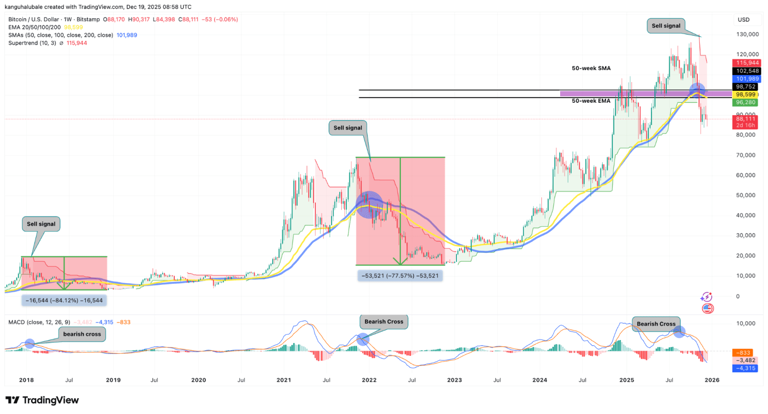

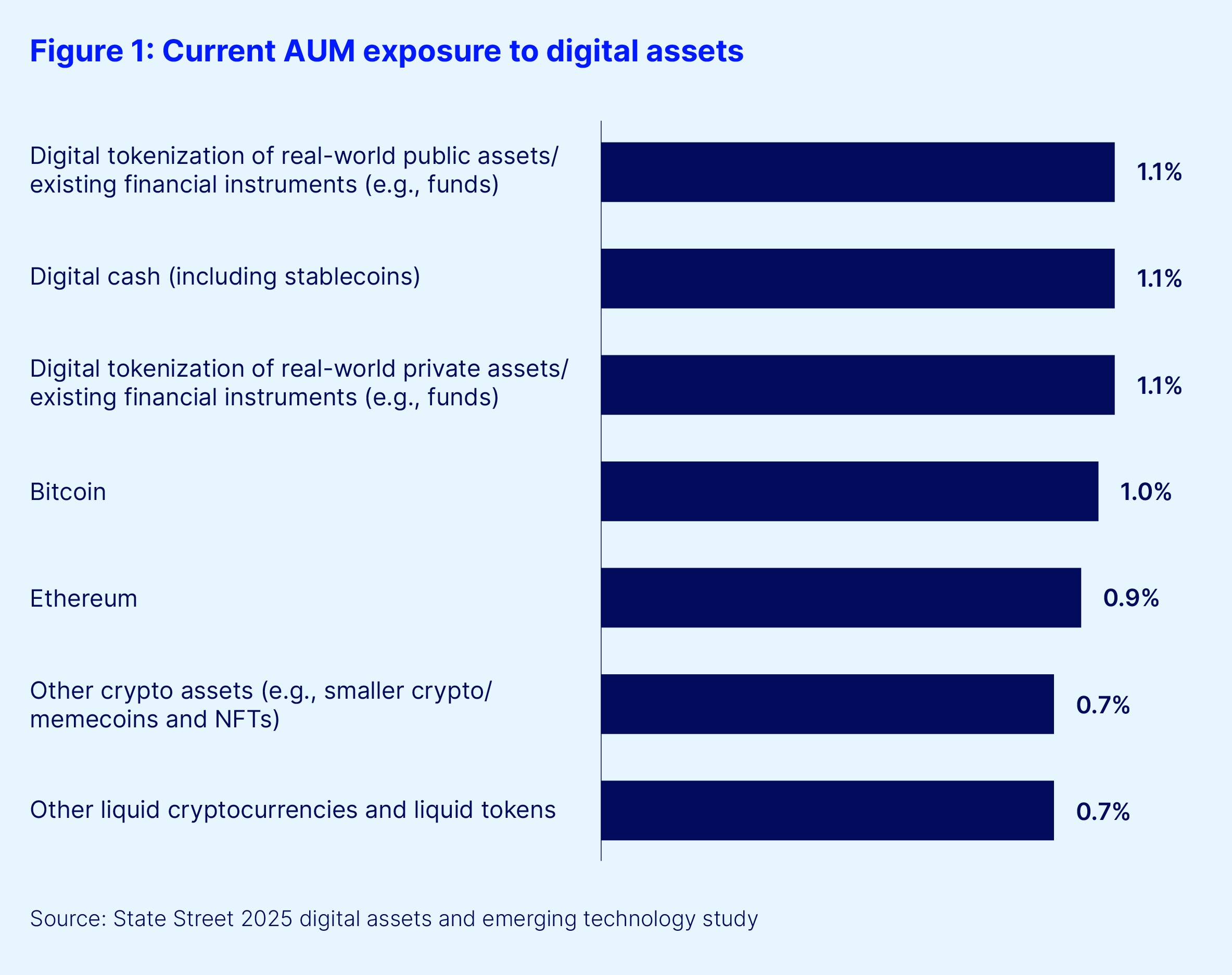
The current debate is not occurring in isolation—it is being driven by real capital flows.
Institutional investors are actively reallocating portfolios:
- Reducing exposure to crypto assets
- Increasing allocations to AI infrastructure and equities
- Shifting toward perceived “safer” growth narratives
This rotation reflects several factors:
- Performance Chasing: Capital flows toward recent winners.
- Narrative Dominance: AI has captured the market’s imagination.
- Risk Perception: Crypto is still viewed as volatile and speculative.
However, history suggests that such rotations often occur near inflection points.
IV. Valuation vs. Asymmetry
One of the most critical distinctions between AI investments and Bitcoin lies in their valuation frameworks.
AI Infrastructure:
- Valuations based on revenue growth, margins, and future earnings
- Increasingly stretched multiples in some segments
- Dependence on execution and adoption timelines
Bitcoin:
- No traditional cash flows or earnings
- Value derived from scarcity, adoption, and network effects
- Highly asymmetric return profile
This creates a fundamental contrast:
- AI represents growth investing
- Bitcoin represents asymmetric macro optionality
For investors, the challenge is determining which framework offers better risk-adjusted returns.
V. The “Crowded Trade” Risk
As capital continues to flow into AI, concerns about crowding are beginning to surface.
Indicators of a crowded trade include:
- Elevated valuations
- Concentrated positioning
- Increased correlation among assets
When too much capital chases the same opportunity, the risk of reversal increases.
This is where the contrarian argument for Bitcoin gains traction.
If AI is becoming crowded, and Bitcoin is being underweighted, the relative opportunity may shift.
VI. Macro Environment: A Deciding Factor
The outcome of the Bitcoin vs. AI debate will be heavily influenced by macroeconomic conditions.
Bullish for AI:
- Stable economic growth
- Continued capital investment
- Technological adoption
Bullish for Bitcoin:
- Monetary instability
- Currency debasement concerns
- Geopolitical fragmentation
In other words, AI thrives in a growth environment, while Bitcoin thrives in uncertainty.
Given the current macro backdrop—characterized by geopolitical tensions, inflation concerns, and shifting monetary policy—the balance between these scenarios remains uncertain.
VII. Institutional Adoption: Diverging Paths
Institutional behavior is another key factor shaping the debate.
AI Investments:
- Driven by traditional asset managers
- Integrated into equity and private market portfolios
- Supported by clear revenue models
Bitcoin:
- Increasingly adopted through ETFs and custodial solutions
- Viewed as both an asset class and a macro hedge
- Still subject to regulatory and perception challenges
The growth of Bitcoin ETFs has been particularly significant, providing a bridge between traditional finance and digital assets.
VIII. The Energy and Infrastructure Connection
Interestingly, AI and Bitcoin are not entirely separate themes.
Both rely heavily on energy and infrastructure:
- AI requires massive data centers and power consumption
- Bitcoin mining depends on energy availability and efficiency
This overlap has led to new investment opportunities at the intersection of the two:
- Energy infrastructure funds
- Data center development
- Power grid modernization
In this sense, the debate is not purely binary—there are areas of convergence.
IX. Behavioral Finance: Timing the Cycle
Investor behavior plays a critical role in shaping market outcomes.
Common patterns include:
- Buying assets after strong performance
- Selling during periods of weakness
- Following dominant narratives
These behaviors can lead to suboptimal outcomes.
The argument that selling Bitcoin during a dip to chase AI gains may be “short-sighted” is rooted in this understanding.
Timing, as always, is everything.
X. Hedge Fund Positioning
Hedge funds are increasingly engaging with both sides of the debate.
Some are:
- Overweight AI equities and infrastructure
- Underweight or neutral on crypto
Others are taking a more balanced approach, recognizing the potential for:
- AI-driven growth
- Bitcoin-driven optionality
Multi-strategy funds are particularly well-positioned to navigate this landscape, leveraging both themes within diversified portfolios.
XI. Long-Term Outlook: Complementary, Not Competitive
While the debate is often framed as a binary choice, the reality may be more nuanced.
AI and Bitcoin represent different dimensions of the investment landscape:
- AI: Productivity, innovation, and economic growth
- Bitcoin: Monetary evolution, decentralization, and store of value
Rather than competing, they may ultimately coexist within diversified portfolios.
XII. Conclusion: A Defining Allocation Decision
The “Bitcoin vs. AI” debate captures a broader tension in modern investing: the balance between growth and protection, innovation and scarcity, narrative and fundamentals.
For investors, the decision is not simply about choosing one asset over another. It is about understanding:
- Market cycles
- Capital flows
- Behavioral dynamics
And perhaps most importantly, it is about recognizing that the most popular trade is not always the most profitable.
As the debate continues to evolve, one thing is certain:
The outcome will shape not only portfolios—but the future direction of global capital itself.