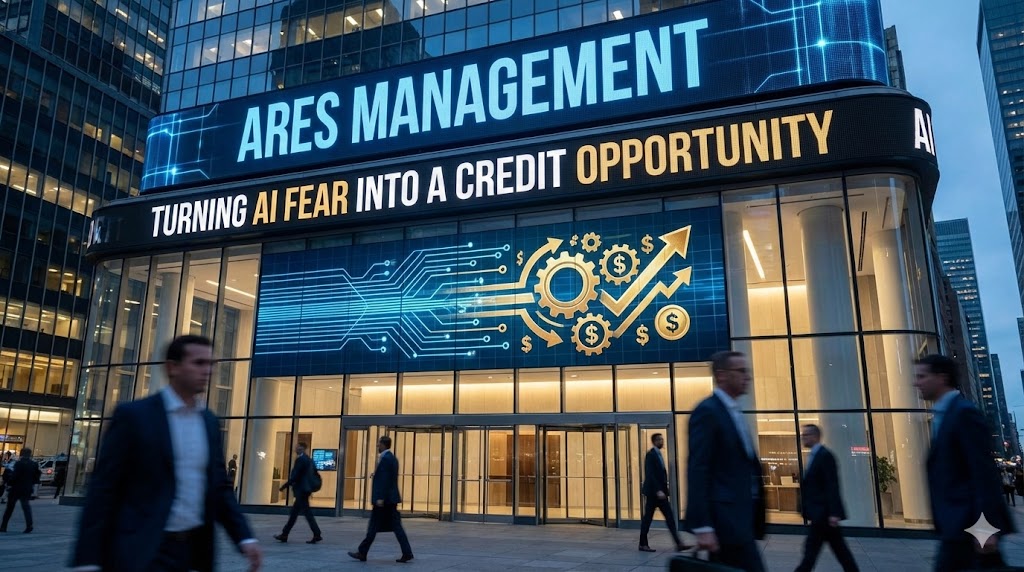
(HedgeCo.Net) Ares is at the center of the market’s biggest private-credit debate: how to price risk when AI might disrupt software business models, and software has been a meaningful borrower segment for private lenders. Ares’ response has been direct: software exposure is limited, underwriting discipline remains intact, and dislocation can create attractive entry points—especially in opportunistic credit and secondaries.
What’s happening
Ares reported assets crossing the $600 billion mark (about $622.5B) alongside strong fundraising momentum and significant deployment, reinforcing its place among the largest U.S. alternatives firms.
At the same time, the stock market has been skittish about private credit’s software exposure, weighing on sentiment across the group even as operating metrics remain robust.
Why it’s trending
1) Ares is selling “durable credit manufacturing.”
The firm’s message is that scale + sourcing + risk management can power through volatility. In 2026, that’s the heart of the private credit pitch.
2) AI disruption is producing a new opportunity set.
Ares has explicitly highlighted that AI-driven dislocation can create chances to buy mispriced assets—via high-yield loans, structured deals, or secondary stakes in funds where discounts widen.
3) Infrastructure is quietly part of the story.
As AI drives data center and power demand, credit managers want exposure to the buildout—often via asset-backed lending, infrastructure credit, and real assets credit. Ares has pointed to expanding AI-related digital infrastructure investing.
What to watch
- Credit quality vs. narrative risk: Even if defaults remain low, the “AI killed software” narrative can keep pressure on valuations and fundraising optics.
- Portfolio transparency: Investors will demand clearer segmentation: which software is vulnerable, which is mission-critical.
- Secondaries math: If discounts widen, secondaries can become a growth engine—but only for managers with patient capital and strong selection skill.
Bottom line
Ares is turning a market fear into a business case: AI disruption creates volatility, volatility creates discounts, discounts create opportunity—especially for the firms with scale and flexible mandates.