
(HedgeCo.Net) As 2026 begins, the investment industry is entering a year where the “big news” isn’t a single event—it’s a collision of forces that will test portfolios, risk models, liquidity plans, and the business models of asset managers themselves. Markets are still digesting a higher-cost-of-capital world, private markets have grown into a systemically important plumbing layer, AI is shifting from theme to infrastructure, and crypto is being pulled deeper into the regulated mainstream. Underneath it all is a question investors rarely have to answer in real time: what happens when multiple pillars of diversification wobble at once?
Below are the biggest news fronts likely to shape the investment industry in 2026—and why they matter now.
1) The “Rate Regime” Is Still the Main Character

After years of markets treating interest rates as background noise, 2026 will continue to be dominated by the consequences of expensive money and the uncertainty of the next move. Whether inflation proves “sticky” or re-accelerates, and whether central banks cut cautiously or are forced to hold, will shape everything from equity multiples to real estate cap rates to private credit defaults.
J.P. Morgan Global Research has framed 2026 as a year where recession risk remains meaningful, putting the odds of a U.S. and global recession at 35% in its outlook—alongside concerns about sticky inflation. JPMorgan Chase That kind of base case doesn’t scream crisis, but it does scream dispersion: the difference between “fine” and “fragile” issuers, sectors, strategies, and managers could widen fast.
Why it matters for investors in 2026
- Duration is no longer a passive decision. Rate sensitivity is back as a primary driver of performance, and “bond ballast” can behave differently depending on whether growth slows or inflation surprises.
- The cost of leverage is a strategy filter. Higher funding costs pressure relative value, structured credit, some macro trades, and parts of private markets that leaned on cheap financing.
- Real assets face a valuation reality check. Commercial real estate and long-duration infrastructure can still work—but the underwriting math is stricter than it was in the 2010s.
2) Private Credit and the Nonbank System: Bigger, Less Transparent, More Central

One of the most important structural stories entering 2026 is the rise of nonbank financial intermediation (NBFI)—investment funds, hedge funds, private credit vehicles, and other nonbank lenders—into a dominant share of global finance. The Financial Stability Board reported that NBFI grew to $256.8 trillion in 2024, growing faster than banks, and flagged “severe limitations” in regulatory data availability for private credit. Financial Stability Board
That matters because private credit is no longer a niche yield sleeve. It’s becoming core financing for mid-market companies, sponsor-backed deals, real estate, and specialty lending. And as it scales, regulators and allocators are asking the same questions: Where is the leverage? Where is the liquidity? Who holds the risk in a downturn?
Reuters’ Breakingviews has highlighted the convergence trend: as banks regain competitiveness and public markets reopen, private credit’s yield premium can compress—pushing the asset class toward “plain old credit,” while simultaneously expanding into retail-oriented evergreen structures that promise some liquidity. Reuters
Major private credit managers are leaning into the 2026 moment. Ares, for example, has framed the period as “growth and maturity” for the asset class. Ares Management Meanwhile, large sell-side and buy-side research arms argue that private credit supply/demand dynamics could remain favorable in a slower-cut environment. Morgan Stanley+1
The 2026 investor tension
- Yield vs. liquidity: Many private credit structures offer periodic liquidity, but the underlying loans are not liquid in the way public bonds are. In stress, the mismatch can become a headline.
- Credit selection becomes everything: A benign default environment can flip quickly if growth slows or refinancing windows close.
- Regulatory scrutiny increases: The FSB has also published recommendations aimed at addressing financial stability risks created by leverage in NBFI—an umbrella that includes strategies and structures commonly used across alternatives. Financial Stability Board+1
3) AI: From Investment Theme to Market Structure Risk
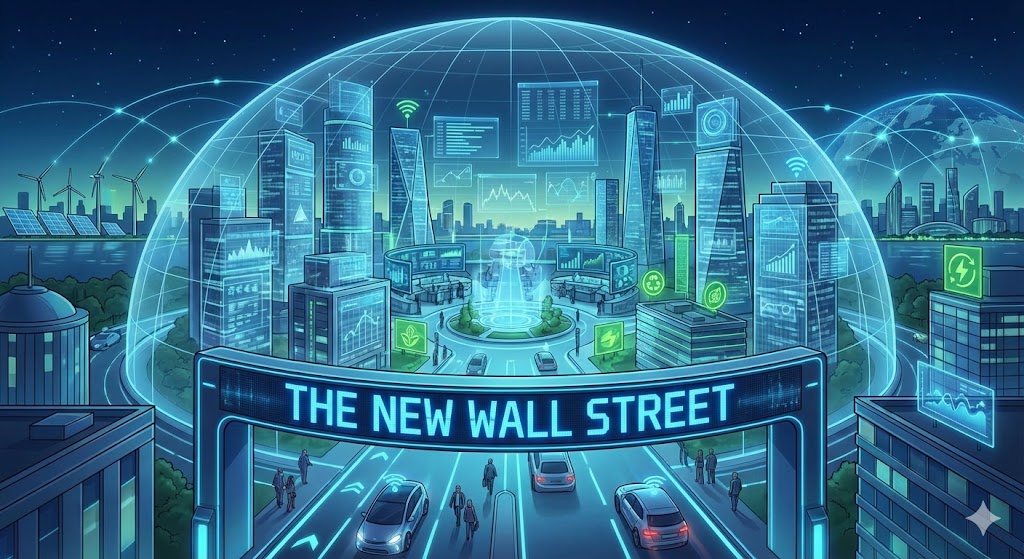
AI will remain one of the most crowded trades and one of the most transformative operational shifts in the industry. The “AI as a market bubble” question is already surfacing in investor surveys: a Guardian report citing a Deutsche Bank survey of investors lists an AI/tech bubble burst as a top risk entering 2026. The Guardian Bloomberg has similarly framed 2026 as a year to watch AI capex trends and broader structural instability beneath near-term optimism. Bloomberg
But AI isn’t just a macro equity story. It’s also changing how asset managers run their businesses. Industry surveys and commentary emphasize that firms are deploying AI across research, portfolio construction, client communications, and middle/back office efficiency—often driven by margin pressure and rising costs. Grant Thornton+1
What makes AI “big news” for the investment industry in 2026
- Crowded positioning risk: If too many portfolios are implicitly long the same AI-exposed factor (mega-cap tech, semis, AI infrastructure), diversification can be thinner than it appears.
- Operational arms race: AI capabilities become table stakes—raising spend, data demands, and cyber risk exposure.
- Governance and model risk: As AI is used for decisions that touch investors (recommendations, personalization, servicing), regulators and boards will focus on explainability, conflicts, and controls.
Notably, the U.S. SEC has withdrawn certain proposed rules from 2022–2023, including the “predictive data analytics” proposal that was often described as an “AI rule” aimed at conflicts of interest. SEC That doesn’t eliminate regulatory risk—it changes it. Instead of one sweeping rule, firms may face a patchwork of enforcement, examinations, and future proposals with different framing.
4) A New Wave of Asset-Manager Consolidation

While markets focus on performance, the business side of investing is dealing with a quiet squeeze: fee compression, higher technology costs (including AI), distribution demands, and clients wanting broader “one-stop” solutions across public and private markets.
The Financial Times reported that U.S. asset managers broke an M&A spending record in 2025, with deals totaling $38 billion and a surge in transactions—driven by consolidation pressure, thinner margins, and a need to scale. Financial Times The logic is straightforward: in an environment where investment products are increasingly commoditized, distribution, breadth, and technology become competitive moats.
What to watch in 2026
- “Private markets + wealth” combinations: Firms chasing retail and high-net-worth distribution for alternatives (private credit, private equity secondaries, structured solutions).
- Tech and data acquisitions: Buying capabilities rather than building them—especially for AI tooling, compliance automation, and risk systems.
- Integration risk: Consolidation can create fund outflows and operational churn if not executed well (a common post-deal challenge cited in the FT coverage). Financial Times
5) Crypto’s Second Act: ETFs, Institutionalization, and Regulatory Gravity

Crypto in 2026 is less about whether institutions show up—they already have—and more about how fast regulated rails reshape the market. The growth of spot crypto ETFs in the U.S. has turned flows, market structure, and custody into core conversations for asset allocators. CFRA, for instance, has documented the scale of ETF demand and regulatory tailwinds that drove major inflows in 2025. CFRA Research
In 2026, the “big news” angle is that crypto is increasingly treated like an investable sleeve that can be packaged, allocated, hedged, and benchmarked—while still carrying policy and volatility risk.
What changes as crypto becomes mainstream
- Flow-driven price dynamics intensify: ETFs can create powerful reflexivity—especially during risk-on periods or volatility spikes.
- More products, more correlation: As crypto becomes easier to own, it can behave more like a macro risk asset in crowded positioning.
- Regulatory clarity (or lack of it) becomes market-moving: The pace of approvals, disclosures, and custody standards directly affects which assets and structures gain institutional acceptance.
6) Financial Stability Anxiety: When Multiple Stress Points Stack
A major “2026 headline risk” is not one asset class blowing up—it’s stacked fragilities: stretched valuations, sovereign bond volatility, and the growing role of nonbanks. The IMF’s October 2025 Global Financial Stability Report warned that financial stability risks remain elevated, noting stretched asset valuations and rising influence of nonbank institutions. IMF+1
That warning dovetails with the market’s internal worry list: AI bubble risk, private credit stress risk, and policy uncertainty all appearing in the same “top concerns” lineup. The Guardian
In practical terms, 2026’s stability story is about
- Liquidity planning: Especially for portfolios mixing public and private exposures.
- Collateral and margin dynamics: For leveraged strategies in a volatile rates environment.
- Cross-market plumbing: Where stress in one area (credit spreads, rates volatility, funding markets) can transmit into others.
The Bottom Line for 2026
If 2025 was about adapting to a more complex, higher-rate world, 2026 is about proving those adaptations work under pressure. The biggest news facing the investment industry this year is the continued repricing of risk—across public markets, private credit, and new investable frontiers like AI and regulated crypto.
For investors and firms alike, the winners in 2026 are likely to share three traits:
- Better liquidity and stress testing (especially across private assets),
- Sharper credit and security selection (dispersion is the theme), and
- Operational maturity (AI governance, cyber resilience, scalable platforms).