
(HedgeCo.Net) The Federal Reserve’s latest 0.25% rate cut has rippled across global markets, but few sectors have felt the impact as immediately and intensely as the alternative investment industry. Hedge funds, private equity firms, real estate managers, and private-credit funds all spent the last 24 hours recalibrating strategy as cheaper borrowing costs opened new opportunities—while amplifying competitive pressures.
For an industry built on sophisticated leverage, arbitrage, and asset-selection advantages, a Fed policy shift is never just “macro news.” It rewires the mechanics of return generation itself.
Hedge Funds: Leverage Becomes Cheaper, Strategies Accelerate
For hedge funds, the rate cut represents a direct reduction in financing costs, particularly for strategies reliant on leverage—such as long/short equity, macro, quant arbitrage, and event-driven funds.


1. Leverage-Heavy Strategies Immediately Benefited
Borrowing to take long positions or short positions becomes less expensive when interest rates fall. Funds that rely on:
- Statistical arbitrage
- Convertible bond arbitrage
- Merger arbitrage
- Macro carry trades
all saw improved spread economics within hours of the Fed’s announcement.Prime brokers reported an immediate uptick in order flow, especially from multi-strategy platforms such as Citadel, Millennium, Point72, and Balyasny. With Treasury yields drifting lower, the risk-free rate compression makes equity and macro trades more attractive on a risk-adjusted basis.
2. Equity Long/Short Funds Expect Alpha Expansion
Lower discount rates typically raise equity valuations, especially for growth sectors like technology and biotech. Hedge funds already heavily positioned in AI, cloud computing, and healthcare innovation enjoyed a relief rally as forward earnings were marked higher.
Managers also anticipate greater dispersion—the essential ingredient for alpha. Rate cuts often fuel rotation between sectors, giving talented stock pickers fertile ground for differentiated performance.
3. Macro Funds Face a Turning Point
For macro managers, a Fed rate cut shifts currency, bond, and commodity dynamics:
- The dollar weakened, boosting emerging-market carry trades.
- U.S. yields fell, creating opportunities in curve steepeners.
- Risk assets—from crypto to commodities—saw capital inflows.
Macro funds thrive in regime shifts, and with the Fed signaling a more accommodative path into 2026, managers expect this environment to be increasingly favorable.
Private Equity: Deal Activity Reawakens After a Slow Year
No segment reacts more dramatically to falling interest rates than private equity, a business heavily dependent on leverage, refinancing windows, and the cost of capital.


1. LBO Financing Suddenly Becomes More Attractive
Lower borrowing costs enhance both:
- Internal rate of return (IRR)
- Debt service coverage ratios
This effectively increases the maximum purchase price PE firms can pay for targets while still maintaining return thresholds. Banks and private-credit lenders reported immediate inquiries from sponsors preparing to revive previously stalled transactions.
2. Exit Windows Could Reopen
Private equity portfolio companies often delay IPOs or sales during periods of high rates. With a dovish shift from the Fed:
- The IPO market may regain momentum.
- Strategic buyers, flush with cheaper capital, may return.
- PE firms may accelerate dispositions to lock in improved multiples.
After nearly two years of sluggish exits, today’s cut is being viewed as a potential turning point for liquidity in the private markets.
3. Valuations: A Double-Edged Sword
Falling rates tend to inflate valuations, good for existing holdings but problematic for new buyers. Several PE managers expressed concerns that a rapid rebound in public market multiples could drive acquisition prices higher before fundamentals have materially improved.
Still, the overall sentiment is clear: The rate cut reopens the deal pipeline.
Real Estate and Infrastructure: Relief After a Painful Rate Cycle
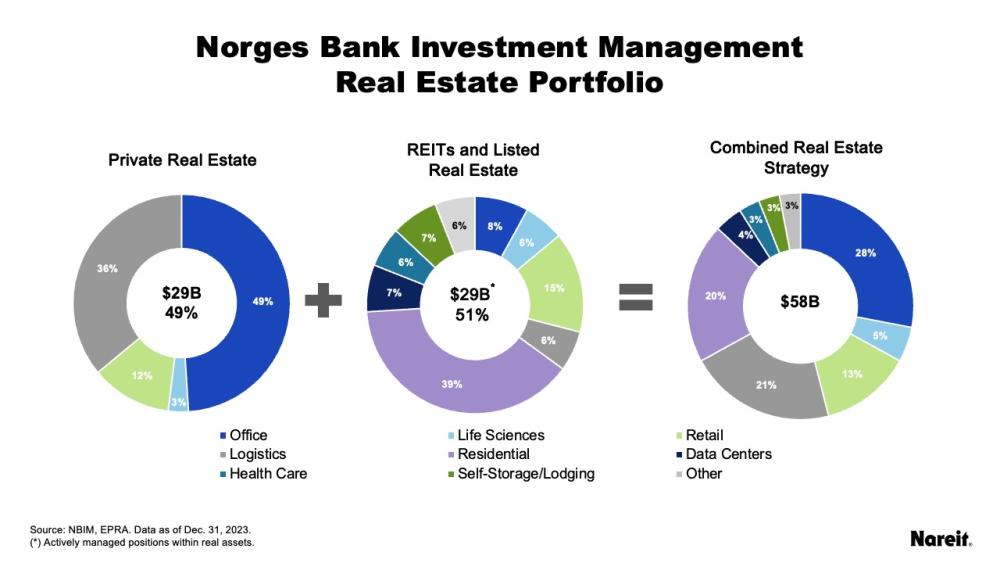
Commercial real estate—squeezed by refinancing pressure, declining occupancy, and high cap rates—arguably benefits the most from a Fed pivot.


1. Cap Rates Expected to Compress
A lower benchmark rate reduces:
- Cap rates
- Weighted average cost of capital (WACC)
- Required investor return thresholds
This lifts property valuations, especially in sectors such as:
- Industrial logistics
- Data centers
- Multi-family residential
Office remains structurally challenged, but even there, refinancing relief is significant.
2. Infrastructure Funds Gain Momentum
Infrastructure assets—utilities, renewable energy, transportation, digital infrastructure—are often financed with long-dated debt. Lower interest expenses improve both:
- Cash yields
- Long-term project viability
Funds focused on AI-driven data centers, power-grid expansion, and renewable battery storage saw immediate investor interest.
Private Credit: A Mixed Reaction
Private credit has been the biggest winner of the higher-rate era. A rate cut means lower yields, which is negative in the short term.
However, there are positives:
- Borrowers become less stressed, reducing default risk.
- Deal volume increases as leveraged finance recovers.
- Competition with banks diminishes as traditional lenders remain cautious.
Overall, private credit moves from a “yield story” to a “growth story.”
Conclusion: A New Playbook for Alternatives
The Fed’s rate cut reshaped the alternative investment landscape in a matter of hours:
- Hedge funds benefit from cheaper leverage and increased dispersion.
- Private equity sees dealmaking revitalized.
- Real estate and infrastructure gain refinancing relief and valuation support.
- Private credit prepares for a shift from income to origination volume.
After two years dominated by high financing costs and liquidity constraints, today’s rate cut signals the beginning of a new cycle—one where agility, capital access, and strategic timing will define the winners across alternative investments.