
(HedgeCo.Net) A decisive shift is underway across global markets. The latest Bank of America Global Fund Manager Survey reveals the largest surge in cash allocations since the early days of the COVID-19 pandemic, signaling that institutional investors are rapidly repositioning for a more uncertain macroeconomic environment. Average cash balances have risen sharply to 4.3%, marking a clear departure from the risk-on posture that defined much of the AI-driven rally over the past year.
What is emerging is not merely a tactical adjustment, but a broad-based “Great De-Risking”—a coordinated retreat from high-beta exposures toward liquidity, defensiveness, and capital preservation. For allocators, hedge funds, and alternative investment managers, this shift carries profound implications for asset pricing, strategy allocation, and the next phase of the global investment cycle.
I. The Signal Behind the Survey
The Bank of America Global Fund Manager Survey is widely regarded as one of the most influential sentiment indicators in global finance. Tracking the positioning of hundreds of institutional investors overseeing trillions of dollars in assets, the survey offers a real-time snapshot of how capital is being allocated across regions, sectors, and asset classes.
This month’s results stand out for their clarity and magnitude.
Key findings include:
- Cash Levels Jump to 4.3%: The largest increase since March 2020.
- Sharp Rotation Out of Cyclicals: Investors are reducing exposure to economically sensitive sectors.
- Declining Overweight to AI Trades: The once-dominant “AI bull market” narrative is beginning to fade.
- Rising Stagflation Concerns: Investors are increasingly pricing in a combination of slowing growth and persistent inflation.
Taken together, these signals point to a coordinated reassessment of risk—a recognition that the macro environment may be entering a more volatile and less predictable phase.
II. From AI Euphoria to Macro Reality
For much of the past 18 months, global markets were driven by a singular theme: artificial intelligence. Capital flooded into technology stocks, semiconductor companies, and data infrastructure plays, fueled by expectations of transformative productivity gains and exponential growth.
This AI-driven rally was not confined to public equities. Private markets, venture capital, and infrastructure funds all participated in what became one of the most concentrated thematic trades in recent history.
However, the BofA survey suggests that this narrative is now being reassessed.Several factors are contributing to this shift:
- Valuation Stretch: Many AI-related assets have reached historically elevated multiples.
- Execution Risk: Questions remain about the timeline for monetization and profitability.
- Macro Headwinds: Rising interest rates and geopolitical tensions are reshaping risk calculations.
The result is a gradual unwinding of the “AI-first” positioning that dominated portfolios—a move toward broader diversification and risk mitigation.
III. The Return of Cash as a Strategic Asset
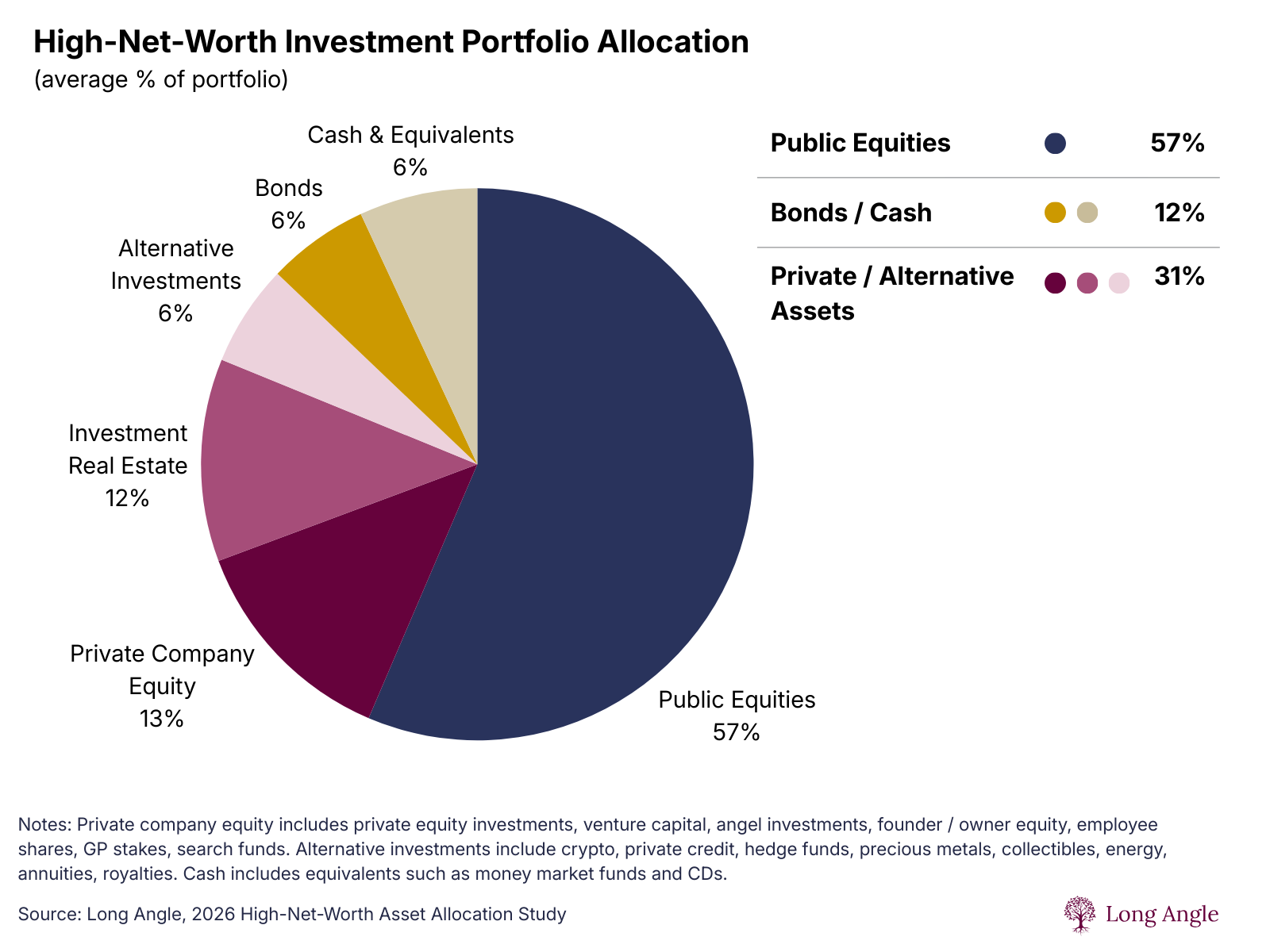

One of the most striking aspects of the survey is the resurgence of cash as a core portfolio component. For years, cash was viewed as a drag on performance—a necessary but unproductive allocation in a low-yield environment.
Today, that perception is changing.
Higher interest rates have transformed cash into a yield-generating asset, offering:
- Liquidity: Immediate access to capital in uncertain markets.
- Optionality: The ability to deploy capital opportunistically during dislocations.
- Risk Mitigation: Protection against downside volatility.
In a world increasingly defined by uncertainty, cash is no longer idle—it is strategic.
IV. Stagflation Fears Take Center Stage
At the heart of the “Great De-Risking” is a growing concern about stagflation—a scenario characterized by slowing economic growth combined with persistent inflation.
This is a particularly challenging environment for investors, as it undermines traditional portfolio construction models. Equities struggle due to weak earnings growth, while fixed income faces pressure from elevated inflation.
The drivers of stagflation concerns include:
- Geopolitical Tensions: Disruptions in energy and trade flows.
- Supply Chain Fragmentation: Increased costs and inefficiencies.
- Sticky Inflation: Persistent price pressures despite monetary tightening.
For fund managers, the implication is clear: traditional risk assets may no longer provide the same level of return or diversification.
V. Sector Rotation and Defensive Positioning
The survey highlights a pronounced rotation toward defensive sectors and away from cyclical exposures.
Areas Seeing Inflows:
- Utilities
- Healthcare
- Consumer Staples
- Energy (as an inflation hedge)
Areas Seeing Outflows:
- Technology (particularly high-multiple names)
- Consumer Discretionary
- Industrials
This shift reflects a broader emphasis on resilience over growth—a preference for stable cash flows and lower volatility.
VI. Implications for Alternative Investments
For the alternative investment industry, the “Great De-Risking” presents both challenges and opportunities.
Private Credit
As discussed in the broader context of capital scarcity, private credit markets may face increased scrutiny. Higher cash allocations and reduced risk appetite could limit capital inflows, while refinancing risks rise.
Hedge Funds
Multi-strategy and macro hedge funds are well-positioned to benefit from increased volatility and dispersion. Firms such as Citadel and Millennium Management thrive in environments where active management and risk control are paramount.
Private Equity
Private equity faces a more complex landscape. While dry powder remains substantial, exit opportunities may be constrained, and valuation adjustments could become more frequent.
VII. The Liquidity Premium Re-Emerges
One of the defining features of the past decade was the compression of the liquidity premium—the extra return investors demand for holding illiquid assets.
In a de-risking environment, this premium is likely to re-emerge.
Investors are increasingly valuing:
- Flexibility
- Transparency
- Daily or near-daily liquidity
This shift could have significant implications for semi-liquid vehicles and interval funds, which have grown rapidly in recent years.
VIII. Global Divergence and Regional Allocation
The survey also points to increasing divergence across regions.
- United States: Slowing growth and policy uncertainty.
- Europe: Energy vulnerabilities and structural challenges.
- Emerging Markets: Mixed outlook, with opportunities in select regions.
This divergence is reinforcing the importance of geographic diversification, while also highlighting the complexity of global allocation decisions.
IX. The Psychology of De-Risking
Beyond the data, the “Great De-Risking” reflects a broader psychological shift among investors.
After a prolonged period of optimism driven by technological innovation and accommodative monetary policy, sentiment is becoming more cautious. This is not panic—but it is a recalibration.
Key behavioral dynamics include:
- Loss Aversion: Greater sensitivity to downside risk.
- Recency Bias: Influence of recent volatility and geopolitical events.
- Herding Behavior: Collective movement toward similar positioning.
Understanding these dynamics is critical for anticipating market movements and identifying potential inflection points.
X. What Comes Next?
The question facing investors is whether the “Great De-Risking” represents a temporary pause or the beginning of a more sustained shift.
Several scenarios are possible:
- Soft Landing: Economic growth stabilizes, allowing risk assets to recover.
- Stagflation: Persistent inflation and weak growth create ongoing challenges.
- Reacceleration: Technological innovation reignites growth and risk appetite.
Each scenario carries different implications for asset allocation and strategy selection.
XI. Strategic Playbook for Investors
In navigating this environment, investors are likely to focus on:
- Dynamic Allocation: Adjusting exposures in response to evolving conditions.
- Risk Management: Prioritizing downside protection.
- Manager Selection: Identifying firms with proven track records in volatile markets.
- Liquidity Planning: Ensuring access to capital when needed.
Flexibility and adaptability will be key differentiators.
XII. Conclusion: A Market at an Inflection Point
The latest Bank of America Global Fund Manager Survey provides a clear and compelling signal: the era of unbridled risk-taking is giving way to one of caution and recalibration.
The “Great De-Risking” is not simply a reaction to short-term volatility. It reflects a deeper recognition that the global macro environment is becoming more complex, more fragmented, and more uncertain.
For investors, this represents both a challenge and an opportunity.
Those who can navigate the shifting landscape—balancing risk and reward, liquidity and return—will be best positioned to succeed in the next phase of the market cycle.
Because in today’s environment, preserving capital may be just as important as growing it.